
Different Types of Business Valuations for Manufacturing Companies

If you own a manufacturing company, a key question that eventually comes up is: “What’s my business actually worth?” While valuations are often done during mergers or acquisitions, they’re also useful for succession planning, securing financing, or simply understanding your company’s position in the market. There’s no one-size-fits-all approach; different types of business valuations and methods apply depending on your operations, growth stage, and financials.
Summit Capital Advisors specializes in helping lower middle market manufacturing companies with $1M-$100M in revenue uncover their true value. Keep reading to explore how valuation works and what to expect.
Key Takeaways
- For manufacturing businesses, physical assets (such as equipment, inventory, and property) carry significant weight, but so do consistent earnings. A balanced valuation reflects both the tangible and operational value.
- Most buyers in this space want to know two things: what hard value they’re getting if things go wrong (asset base), and what return they can expect if things go right (income/cash flow).
- The right approach depends on business size, industry type, and exit goals; your growth trajectory, customer mix, and ownership structure all shape which model works best.
- In lower-middle-market M&A deals, particularly when institutional money is involved, third-party valuations help validate the asking price.
Why Valuation Matters for Manufacturing Businesses
Valuing a manufacturing business involves understanding the core mechanics of how the company creates value. This encompasses its production capabilities, pricing leverage, earnings before interest, supply chain resilience, and long-term scalability.
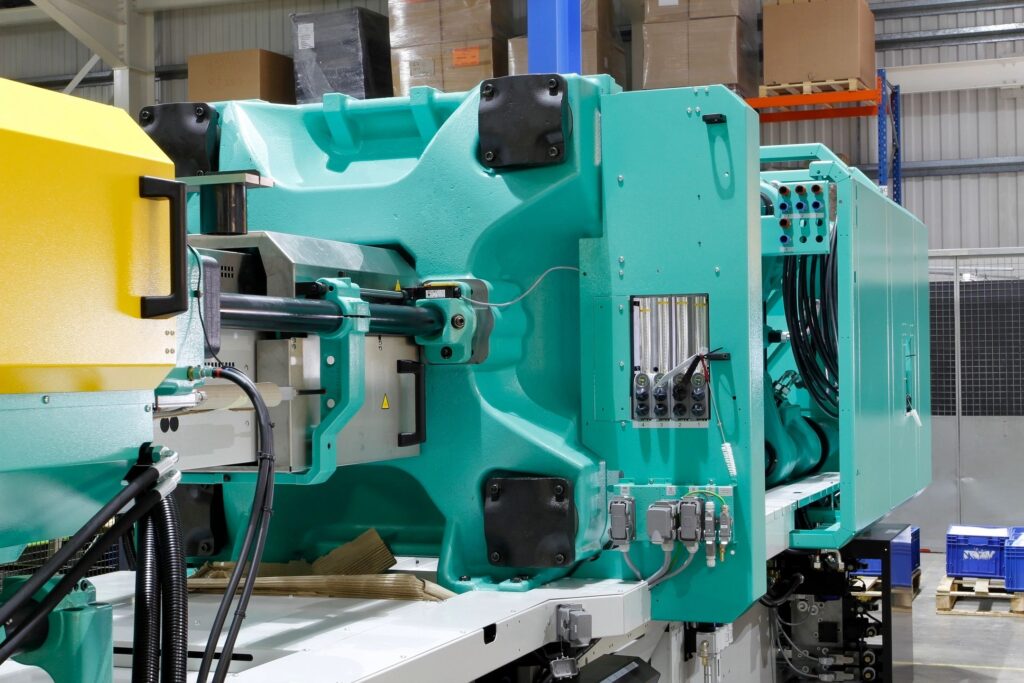
Manufacturing operations are asset-intensive and often operate on thin margins, which makes the valuation process more intricate compared to service-based firms.
Hence, different types of business valuations for manufacturing companies reveal how resilient it is to market shocks, how well-prepared it is for scale.
What Is Business Valuation and Why Is It Critical in Manufacturing?
Business valuation in manufacturing is the process of determining a company’s fair market value. Valuation accounts for both tangible and intangible factors. While tangible assets such as machinery, real estate, and inventory form a visible part of the equation, much of the value lies in operational intangibles:
- Proprietary production processes
- Skilled labor force
- Long-term contracts with key customers
- Integration into high-demand supply chains
For manufacturing owners, a precise valuation is crucial when planning a sale, attracting investors, applying for financing, or preparing for succession. It helps you understand where your business stands today and what levers you can pull to increase its worth.
Unique Challenges in Manufacturing Valuation
Manufacturing companies face valuation complexities not typically encountered in other industries. These include:
- Inventory management. Fluctuations in raw material prices, spoilage risk, and slow-moving inventory can significantly distort value if not adequately assessed.
- Equipment condition and obsolescence. Machines may appear high-value on paper, but they could be technologically outdated or require costly maintenance.
- Working capital cycles. Long production or delivery timelines can tie up capital, affecting cash flow and liquidity, both of which are critical to valuation.
- Margin volatility. Manufacturing margins are vulnerable to fluctuations in energy prices, labor costs, currency exchange rates, and geopolitical issues that may not be fully reflected on the balance sheet.
When Do Manufacturing Businesses Need a Valuation?
Understanding the overall value of a manufacturing business is essential during pivotal moments:
- Selling the business. An accurate valuation builds credibility with buyers, supports negotiation leverage, and ensures fair pricing based on operational strengths.
- Succession planning. For family-owned or closely held firms, valuation plays a crucial role in structuring buyouts, tax planning, and facilitating equitable wealth transfer.
- Strategic partnerships and mergers. Investors and partners seek a clear understanding of the value the business brings to the table and the synergies it offers.
- Raising capital or refinancing. Whether through private equity, debt, or public markets, valuation has a direct impact on terms and confidence.
- Internal benchmarking and goal setting. Valuation can reveal internal inefficiencies, overvalued assets, or untapped potential.
The Different Types of Business Valuations for Manufacturing
Manufacturing companies pose unique challenges for valuation due to their capital-intensive structures, long working capital cycles, and operational complexity. To obtain a fair assessment of a manufacturing business’s value, valuation professionals typically rely on one or a combination of three primary approaches.
1. Asset-Based Valuation. This method evaluates a business based on the value of its underlying intangible assets minus its liabilities.
2. Income-Based Valuation. This approach focuses on the amount of income the business is expected to generate in the future.
3. Market-Based Valuation. This approach derives value by comparing the business to similar companies that have been sold or are publicly traded.
Key Business Valuation Methods for Manufacturers
Valuing a manufacturing business requires more than applying general formulas. It involves a layered analysis that accounts for the physical assets, income potential, market position, and even the state of inventory.
Here’s a deeper look at the primary valuation approaches used in this space, along with context on when and how each one is relevant.
1. Asset-Based Valuation
Manufacturers often own substantial hard assets, including machinery and tooling systems, warehouses, and fleets, and asset-based valuation helps capture that value directly.
- Tangible asset method. This approach calculates the fair market value of physical assets, including machinery, production lines, vehicles, and property.
- Adjusted book value. Goes beyond the standard accounting value and reflects what those assets are worth in today’s market.
- Liquidation value. Focuses on how much could be recovered if the business were to shut down and sell off its assets quickly.
Best suited for:
- Fabrication shops, machining operations, and other heavy industrial businesses
- Companies where assets are central to production and have clear market value
- Situations where profitability is low but asset holdings are strong
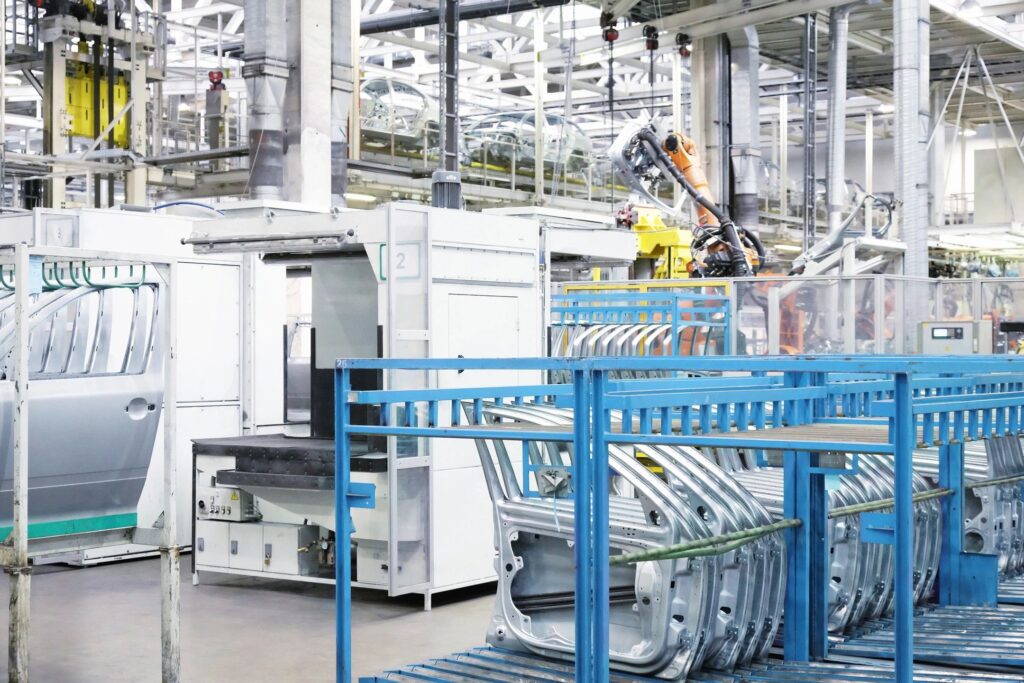
2. Income-Based Valuation
When a manufacturing business is consistently profitable, income-based methods give a clearer view of what those earnings are worth today and into the future.
- Discounted Cash Flow (DCF). Projects future cash flows based on expected revenues, costs, and capital investments, then discounts them to present value.
- Capitalization of earnings. A simpler version that uses a single-year metric (like adjusted EBITDA or Seller’s Discretionary Earnings) and capitalizes it based on a risk-adjusted rate.
- Adjustments That Matter. For manufacturing, adjustments must be made for owner compensation, sale price, perks, depreciation schedules, and one-time costs (such as a significant machine overhaul).
Best suited for:
- High-performing manufacturers with consistent earnings
- Owner-operated firms preparing for transition or sale
- Buyers focused on return on investment and cash yield
3. Market-Based Valuation
This method estimates value by comparing your business to similar manufacturing firms that have sold recently or are publicly traded.
- Industry-specific comps. Comparables are drawn from databases that track private company sales, ideally within the same niche, size range, and geographic area. Metrics such as EV/EBITDA, EV/Sales, or price per square foot can be used, depending on the availability of data.
- Manufacturing multiples. Most small to mid-sized manufacturers trade between three and six times EBITDA. However, this range can vary based on industry segment (e.g., aerospace vs. sheet metal), customer concentration, and operational maturity.
- M&A advisors add value. Summit Capital Advisors help bridge this gap by sourcing proprietary comps, understanding willing buyer dynamics, and benchmarking final valuation more accurately than DIY estimates.
Best suited for:
- Businesses preparing for M&A or seeking private equity
- Sectors with frequent deal activity (e.g., packaging, precision components)
- Owners needing real-world pricing guidance
4. Inventory and WIP Considerations
Inventory can significantly impact valuation when misrepresented or poorly managed. Manufacturing businesses often hold inventory in three stages:
- Raw materials. These are valued based on purchase cost, but must be assessed for obsolescence or damage.
- Work-in-Process (WIP). Partially completed goods that require accurate valuation based on labor, overhead, and material inputs to date. Often underreported or inconsistently tracked.
- Finished goods. Ready-for-sale inventory should be reviewed for marketability, aging, and alignment with customer demand.
Inventory Valuation Methods:
- FIFO (First In, First Out). Most common and aligns with inflationary pricing
- LIFO (Last In, First Out). Rarely used today, but it can impact tax implications
- Weighted Average. Smooths out pricing variations and works well for bulk inventory
Adjustments to Consider:
- Write-downs for obsolete stock
- Penalties for overstocking slow-moving SKUs
- Seasonal or cyclical adjustments to inventory value

How To Choose the Right Valuation Method in Manufacturing
Choosing the right valuation method should help you match the process to how your manufacturing business creates and sustains value.
Here’s how to decide which valuation method, or combination, makes the most sense:
1. Type of Manufacturing
The production model influences the predictability of revenue and the repeatability of processes, both of which are crucial in valuation.
- Custom job shops (e.g., precision machining, prototyping). Revenue can be lumpy, client-specific, and heavily reliant on skilled labor. These businesses often lean on income-based or market-based valuations, especially when backed by strong margins or long-standing customer relationships.
- Batch manufacturers (e.g., small-run plastics, food processing). These companies sit between high-volume and job shops. Depending on how well processes are standardized and how diversified the customer base is, a mix of income and asset-based valuation methods can be used.
- Mass producers (e.g., packaging, automotive components). With standardized processes and predictable output, these businesses often benefit from income-based and market-based methods.
2. Profitability and Earnings Quality
If your business has steady, recurring income, the income-based approach, like Discounted Cash Flow (DCF) or Capitalization of Earnings, is often the most useful for valuation.
However, this only works well if:
- Financial records are clean and normalized (e.g., owner salary adjustments, one-off costs removed)
- Earnings are consistent year-over-year
- Future cash flows are reasonably predictable
3. Size and Condition of the Asset Base
Asset-heavy manufacturers, such as CNC shops and metal fabricators, or businesses with proprietary machinery, often hold significant value in their physical infrastructure.
Here’s when asset-based valuation makes more sense:
- The business owns major equipment and real estate outright
- Cash flow is weak, but assets are well-maintained and have resale value
- The company is being sold for parts (e.g., retirement or closure) or is facing distress
4. Growth Potential and Scalability
Small businesses are in a position to grow, say, through capacity expansion, automation, or untapped distribution channels; this future upside must be factored in.
That’s where income-based and market-based valuations become more critical:
- Income-based models capture projected revenue growth and margin expansion
- Market-based methods allow sellers and potential buyers to benchmark what similar growth-stage companies are trading for in the open market.
Verdict
For most manufacturing businesses in the Main Street and Lower Middle Market, no single method tells the whole story. Buyers and advisors often use a blended approach that balances:
- The tangible value of machinery, inventory, and facilities
- The earnings power and cash flow predictability
- The market reality of comparable business sales and buyer appetite
How a blended approach works
A blended approach combines insights from multiple valuation methods, typically the asset-based, net income-based, and market-based approaches, to create a more realistic and balanced picture of the business’s worth.
For example, a buyer might start with the income-based value using Discounted Cash Flow to understand future earning potential. They’ll then compare that to market comps to see what similar companies are selling for in the current environment.
How Valuation Supports Selling a Manufacturing Business
Whether you plan to exit within the next 12 months or are simply preparing for the future, understanding the actual value of your manufacturing business is crucial. Valuation is a tool that shapes your strategy, aligns buyer expectations, and gives you leverage during negotiations.
Sets Realistic Price Expectations
Without a solid valuation, owners risk pricing their business too high or too low. A defensible valuation sets realistic expectations by factoring in earnings, asset value, and market share.
Helps Attract Qualified Buyers
Buyers in the $1M–$50M space, especially those backed by lenders or private equity, need confidence in the numbers. A solid valuation supported by clean financials and explicit assumptions signals professionalism and can weed out tire-kickers early in the process.
Builds Trust and Transparency in the M&A Process
When sellers present a precise, third-party valuation, it lowers friction during due diligence. It shows buyers there’s nothing to hide, financials are normalized, assets are documented, and real operations support earnings.

Boosts Confidence in Financial Reporting
A valuation requires digging deep into the numbers, adjusting for owner compensation, one-time costs, or inventory fluctuations. This cleanup often results in clearer books, making the business more appealing to banks, brokers, and strategic buyers.
Mistakes To Avoid in Manufacturing Business Valuations
Even experienced owners can unintentionally misrepresent their company’s value. These missteps are particularly common in smaller shops or owner-dependent operations:
- Undervaluing machinery or overvaluing goodwill. Some willing sellers fail to account for the real resale value of well-maintained equipment, especially in niche markets. Others overestimate goodwill, assuming their brand or client relationships will carry high value without considering buyer risk perception.
- Inaccurate inventory reporting. Failing to write down obsolete stock, overestimating work-in-progress (WIP), or mixing up raw materials with finished goods can lead to inflated balance sheets that don’t hold up under scrutiny.
- Ignoring seasonal production cycles. If a business experiences seasonal fluctuations (e.g., packaging for festivals or parts for agricultural machinery), using annualized averages without context can mislead its profitability assessment. Buyers want to understand working capital swings throughout the year.
- Not normalizing cash flow properly. This includes everything from personal expenses buried in the books to one-time revenues or costs. If you don’t adjust for these, your EBITDA or Seller’s Discretionary Earnings (SDE) could be misleading, causing valuation gaps or deal re-trades later.
Summit Capital Advisors Supports Your Valuation and Exit Strategy
Whether you’re preparing to sell, seeking investment, or simply trying to gain a better understanding of your business, a proper valuation provides clarity and insight.
It highlights what’s working, reveals where value is hidden, and helps you make informed decisions about future growth rates, succession, or exit.
Contact Summit Capital Advisors for a confidential consultation and a tailored valuation strategy designed specifically for manufacturing companies with revenues between $1M and $100M. Your exit deserves clarity, thorough preparation, accurate financial statements, and expert guidance.
Frequently Asked Questions (FAQs)
What’s the best way to value a manufacturing company?
For most manufacturing businesses in the $1 million to $100 million range, a blended approach is the most reliable for capital expenditures. That typically means combining asset-based methods (to account for machinery, inventory, and facilities) with income-based methods (to reflect cash flow and earnings potential).
How do I determine the value of my manufacturing equipment?
The enterprise value of manufacturing equipment can be determined using a few different methods:
- Adjusted Book Value. Starts with accounting records and adjusts for market realities, such as age, condition, and depreciation.
- Comparable Sales (Market Comps). Review recent sales of similar equipment on secondary market conditions or auction sites.
- Certified Machinery & Equipment Appraisal (CMEA). A formal valuation done by an accredited appraiser, often required by lenders in SBA-financed deals or strategic sales.
Does inventory increase a manufacturing business’s value?
Yes, but only if it’s accurate, saleable, and properly tracked. Inventory that’s in good condition and aligned with current demand can add significant business value to a deal.
What EBITDA multiples do manufacturing companies sell for?
In the lower middle market, manufacturing businesses typically sell for 4× to 8× EBITDA, depending on factors like:
- Industry segment (e.g., aerospace vs. general metalwork)
- Customer concentration
- Recurring revenue
- Quality of financials and systems
- Operational independence (vs. owner dependence)
Can a buyer finance a manufacturing acquisition based on valuation?
Yes, especially when using SBA 7(a) loans or conventional bank financing. Lenders often request a formal business valuation to support the purchase price and confirm that the deal is financeable based on the business’s cash flow and asset value.